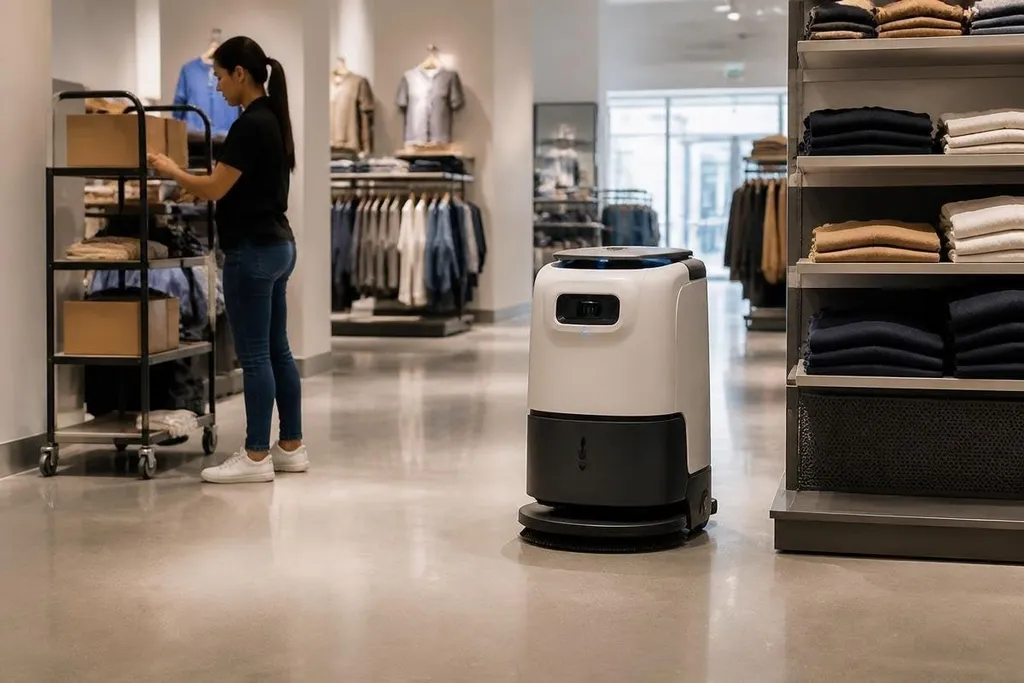
Retail robots are moving into stores because they can handle repeat work that staff often do between customer requests. Shelf checks, floor cleaning, stock movement, and order pickup all follow set steps that machines can repeat without taking a full shift away from the sales floor.
Quick read
- Robots can check shelves with cameras, LiDAR, or barcode scanners while staff help shoppers.
- Their value depends on a clear task, safe movement around people, and a link to store software.
The work robots can handle
A retail robot usually starts with one narrow job. A mobile base can move through aisles, a camera can check shelf space, and software can compare what it sees with the store’s stock records. That turns a manual walk into a repeatable scan.
Cleaning robots follow a similar pattern. They map open floor areas, avoid fixed objects, and return to a charging station when their battery runs low. Staff still deal with spills, stairs, tight spaces, and areas blocked by shoppers.
Stock movement is another clear fit. A robot can carry a tote between a back room and a pickup point, while a worker handles the item check and customer handoff. The machine takes on the walking distance, which can leave staff more time for work that needs judgment or conversation.
Why the timing matters
Retail stores face a daily mix of planned work and sudden requests. A shelf may need checking after a delivery, an online order may need collecting from the back room, and a busy aisle may need cleaning before the next rush.
Robots matter here because the tasks repeat but the timing changes. A store can send a machine when a scan is due, when a floor zone needs attention, or when a tote is ready to move. The useful part is the link between the robot and the store’s existing work system.
That link also decides how much staff must do by hand. If a shelf robot can send an image and a location to inventory software, a worker can check the right aisle instead of searching the whole store. If the robot only records a video, someone still has to watch it and decide what changed.
The useful question is what staff still do after a retail robot finishes its run. Retail robot reporting at Robot24.com can tie a claim to the store, robot model, task, and date, so you can see what the machine changed before the next section looks at its limits.
The limits inside a store
A shop is a harder place for a robot than an empty warehouse. People stop without warning, children move at low height, displays change, bags fall into aisles, and bright windows can affect camera readings.
The robot also needs a safe way to stop. Staff need to know where the emergency stop is, what an alert means, and how to move the machine when it cannot finish a route. A robot that needs constant rescue can add work instead of removing it.
Data raises another practical issue. Shelf images may show shoppers, staff, or purchase information on screens. Retail teams need rules for what the robot records, where that data goes, and how long the store keeps it.
I think retail robots are worth buying only when the task can be measured before installation. A store should know how many shelf checks happen in a shift, how long they take, and what result counts as a useful scan.
A buying check for retail teams
Use this list before asking for a robot trial:
- Name one task: Pick shelf scans, floor cleaning, tote movement, or another defined job.
- Record the starting work: Measure staff time, route length, missed checks, and handoffs.
- Check the store map: Mark lifts, stairs, narrow aisles, doors, charging points, and busy zones.
- Set the human steps: Decide who loads the robot, handles alerts, checks its data, and fixes failures.
- Price the full setup: Include the robot, software, charging equipment, training, repairs, and staff time.
A small trial should end with a number the store can verify.
If shelf checks happen twice daily instead of once, or a tote route takes fewer staff minutes, the team has a basis for a wider rollout. If the result depends on constant manual help, the task needs a different design or a person instead.