Fine jewellery feels convincing when proportion and purpose agree. The appeal begins with a recognisable identity, but it lasts because the piece has been resolved for real wear. At its best, the design asks buyers to consider origin, materials, labour, longevity and transparency as connected parts of one purchase. That clear purpose offers more than a passing trend: it creates an aesthetic that can be adapted to personal taste without losing its essential character. The intended impression is refined, with a result that remains practical.
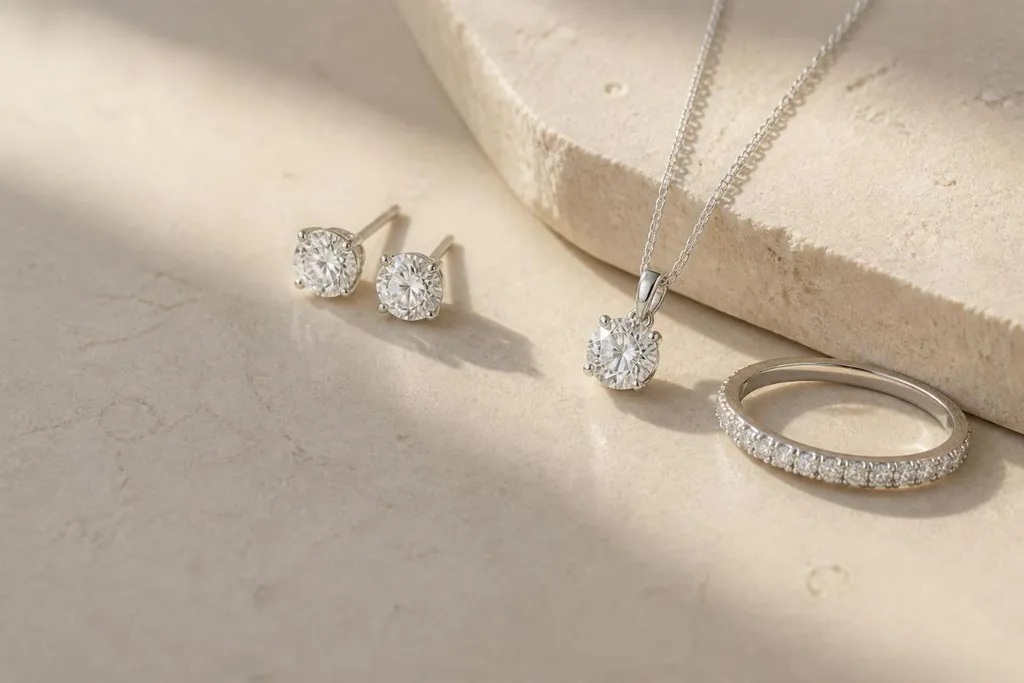
For a clearer view of scale, proportion and finishing, view the lab diamond jewellery collection. Comparing several interpretations helps separate the essential character of the style from optional details such as metal colour, accent stones or band treatment. That distinction is valuable because optional ornament should support the central idea, not disguise a proportion that never felt quite right.
Looking Beyond a Single Ethical Claim
The defining idea is not a decorative extra; it controls how the whole piece is read. Responsible choices do not require a particular aesthetic; the same principles can support a classic solitaire, coloured gemstone or contemporary bespoke ring. Supporting details should reinforce that first impression instead of competing with it. That discipline keeps the composition refined rather than overstated, while supporting a piece that remains practical.
A second layer comes from the supporting materials and geometry. Balance cut, face-up dimensions, colour and clarity rather than pursuing a single headline grade; the most satisfying combination depends on the design. Reverse settings, closures and joins should be finished as carefully as the visible surface, since reliability and comfort are part of perceived quality. This is why two pieces built around the same headline idea can produce very different moods: one may feel crisp and restrained, another warmer or more decorative, without either losing the design's identity. From every angle, the workmanship should look refined and feel practical.
Questions Worth Asking Before You Buy
Before comparing minor specifications, establish the proportion that feels right on the wearer. Ask specific questions about stone origin, recycled or newly mined metal, certification, manufacturing and aftercare rather than relying on a single broad claim. The strongest option is the one whose scale supports the design rather than merely producing the largest possible impression. Such comparison encourages a refined decision with a practical basis.
Proportion becomes practical in the setting. Durable construction and repairability matter ethically because a ring designed for decades of wear uses its materials more meaningfully. This should be assessed from the side as well as from above, particularly if the piece will be worn often or paired with other jewellery. The finished construction should appear refined and prove practical.
Longevity, Aftercare, and Responsible Value
The right piece should support normal life rather than create constant anxiety. Everyday suitability depends on the format of the piece, the delicacy of its materials and how readily it can be put on, secured and worn without adjustment. Routine care should follow the most delicate material in the piece: use gentle cleaning, store it separately and have moving parts or settings checked when wear becomes visible. Those habits help a refined piece remain practical.
Styling should also be considered beyond the first purchase. The strongest choice will connect with the wearer's usual colours, existing metals and level of formality, making it easy to reach for rather than saving indefinitely. Thinking ahead does not restrict spontaneity; it simply ensures that the piece remains versatile as the wearer's collection and occasions evolve. The wider collection can then feel refined, while this piece remains practical.
Final Thought
The enduring appeal lies in more than the headline feature. A thoughtful example uses that feature to guide proportion, setting and the way the piece behaves in everyday life. By comparing the complete design - including profile, comfort and future pairing - a buyer can choose jewellery that feels personal now and remains coherent long after fashions shift. Patient comparison is part of choosing well, not a delay. A short pause now can prevent a visually impressive but unsuitable choice. That is the difference between a merely attractive option and one that feels both refined and practical.